

2023 represented a transformative moment in the world of competitive gaming, when Valve launched Counter Strike 2 on Source 2 Engine. The move to a new engine provided a dramatic leap forward in terms of graphical improvement and refinement of game play; however, it created significant demands upon players’ hardware processing capabilities. For competitive players, the requirement for the new engine was a prompt for a massive upgrade to their PCs.
Counter Strike 2 represents a fundamental departure from the design architecture of Counter Strike GO, as it includes a “sub-tick” system. The sub-tick system is dependent upon extremely fast CPU cycles and a constant rate of frames per second being delivered. As such, the performance of the hardware required to run Counter Strike 2 is dramatically different from what was required to run CS:GO. Additionally, the performance of the hardware is CPU based, and therefore highly dependent upon the speed of a player’s single core and the size of the player’s cache pool. Below is a comprehensive guide covering all aspects of building and optimizing a rig to compete competitively in 2026 CS2.
System Requirements: A Reality Check
Although Valve’s official recommendations for running the game state that an Intel I5 750 with 8 GB of RAM should be able to run the game, in reality, this configuration will only provide approximately 30 – 40 frames per second at 640 x 480 with all graphics settings turned down. For the purpose of competitive play, both configurations are essentially unusable.
While the configurations recommended by Valve (i7-9700K, RTX 2070, 16 GB of RAM) represent a much more reasonable expectation for modern standards, players competing in 2026 will expect far higher standards for 240 Hz+ competitive environments.
Performance Scaling Across Resolutions
Counter-Strike 2 demands vary significantly by resolution:
- 1080p (1920x1080): 53% more demanding than CS:GO
- 1440p (2560x1440): 49% more demanding than CS:GO
- 4K (3840x2160): 54% more demanding than CS:GO
At low graphics settings (competitive standard), 1080p remains the target for maximum FPS. This shift from GPU-heavy rendering to CPU-intensive processing is critical to understanding CS2 PC build recommendations.

Building Your Best PC Setup for CS2
- CPU: AMD Ryzen 5 7600X (8-12 cores, 5.0+ GHz)
- Motherboard: MSI B650 GAMING PLUS WIFI
- GPU: RTX 4060 or RTX 4060 Ti (8-16GB VRAM)
- RAM: 16GB or 32GB DDR5 (6000 MHz CL30)
- Storage: 1TB NVMe SSD (PCIe 4.0)
- Power Supply: 750W Gold-rated
- Cooling: Quality air cooler (Noctua, be quiet!) or 280mm AIO
- Expected Performance: 350-450 FPS at 1080p, low settings; stable 240Hz+ for competitive esports
- Estimated Cost: $1,500 USD+ (Due to skyrocketed prices on RAM and NVMe SSD)
As stated previously, the main goal of CS2 hardware was to find a balance of long term use, competitive performance, and upgradeability. The Ryzen 5 7600X is a very powerful cpu that is capable of doing several things at once, and a more affordable option. As mentioned earlier, the Ryzen 5 7600x uses DDR5 ram, but you can always choose the AM4 platform and go for DDR4.
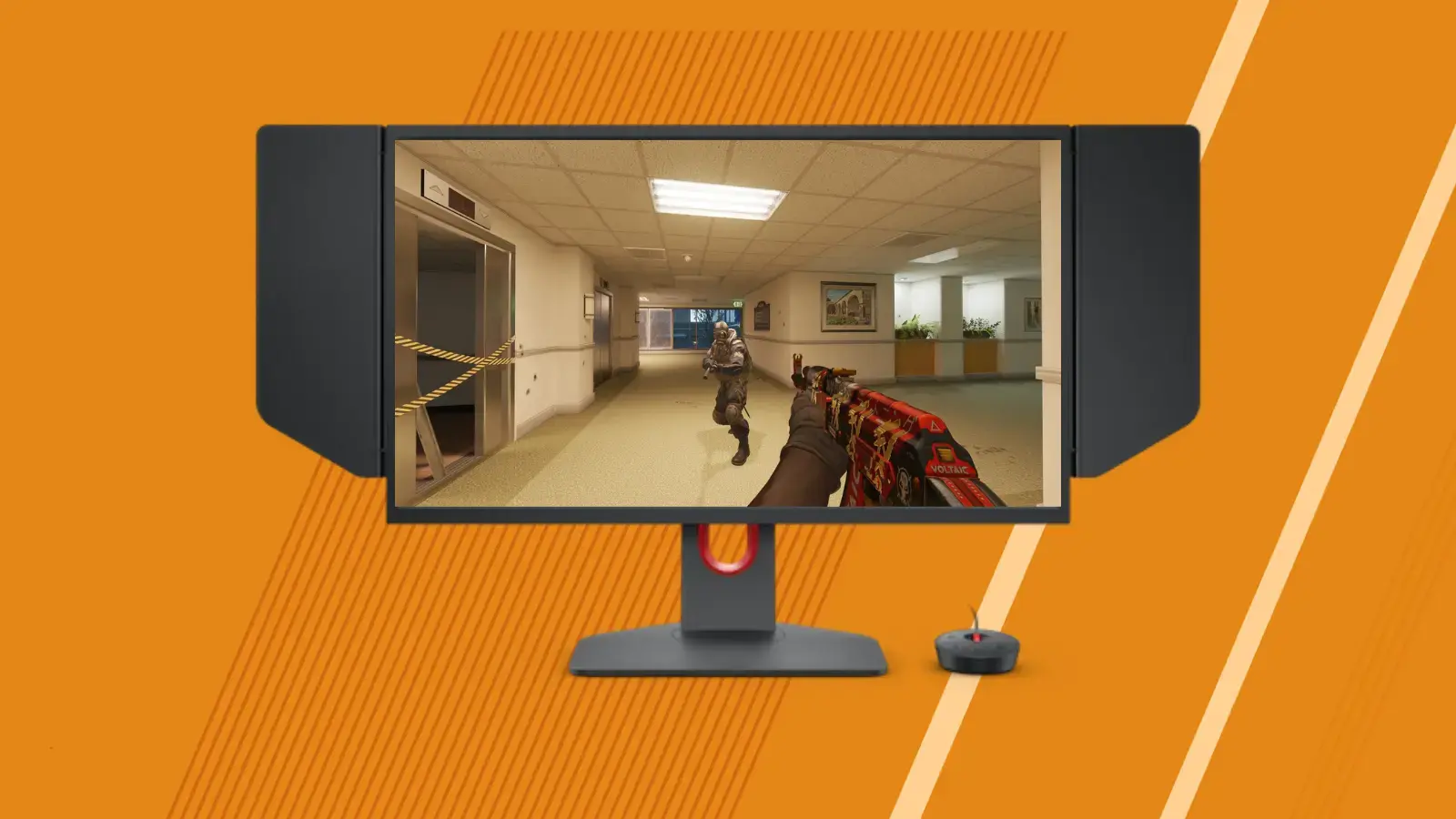
Optimizing Windows 11 for Counter-Strike 2
Modern Windows optimization for CS2 focuses on reducing system overhead and maximizing CPU performance.
Power Plan Optimization
- Press Win + X and open Settings → System → Power & battery → Advanced options
- Select High Performance power plan
- Within Advanced options, locate Processor power management and set Set Minimum processor state: 100%, Set Maximum processor state: 100% and Set System cooling policy: Active

System Performance Tweaks
Turn off all visual effects that are not needed:
- Settings –> Ease of Access –> Display –> Transparency Effects –> Toggle OFF
- Settings –> Notifications –> Turn Off All Notifications
- Use Task Manager (Startup Tab) to remove anything you do not want to run at start-up.
Adjust your mouse input as follows:
- Settings –> Devices –> Bluetooth –> Mouse –> “Enhanced Pointer Precision” –> Toggle OFF
- Pointer Speed = 6 / 11 (The speed setting used by most professional gamers).
If you have the Xbox Game Bar on your computer, disable it by doing the following:
- Settings –> Gaming –> Xbox Game Bar –> Toggle OFF
- Settings –> Gaming –> Game Mode –> Toggle ON (Game mode will help with responsiveness of the operating system)
Update critical drivers for your hardware including:
- Your graphics card driver (Latest NVIDIA or AMD drivers directly from their websites).
- Chipset drivers from motherboard manufacturer
- BIOS update (if available and stable) for CPU microcode improvements
Network Optimization
For esports players, latency matters. Configure your router:
- Use wired Ethernet (Gigabit connection minimum)
- QoS settings: Prioritize gaming traffic if sharing bandwidth
- DNS: Use Cloudflare (1.1.1.1) or Quad9 (9.9.9.9) for faster resolution

Steam Client Configuration for CS2
Steam settings directly impact CS2 performance. Minimize overhead with these adjustments:
Friends & Chat:
- Disable "Show avatars as animated images"
- Disable "Show animated frames in profile"
Interface:
- Set "On startup" to Library (faster launch)
- Disable "Enable GPU rendering of web pages" (uses system resources)
- Disable "Display warnings when connecting to untrusted servers"
Library:
- Disable "Low network load mode"
- Disable "Simplified mode"
- Disable "Show community content"
Remote Play:
- Disable entirely if not using

Configuring Counter-Strike 2 Launch Options
Launch options apply performance tweaks automatically when CS2 starts. Access via: Steam Library → Right-click CS2 → Properties → General → Launch Options
-nojoy -high +fps_max 0 +mat_queue_mode 2 +engine_low_latency_sleep_after_client_tick true +r_dynamic 0 -console -noforcemparms
If you want to know how to Enable Multicore Rendering in CS2, then for this we add +mat_queue_mode 2 to your launch options — this is the CS2 multicore rendering setting that activates multithreaded material processing. Multicore rendering distributes CPU load across all cores, boosting FPS by 20-30% in CS2. It works best on CPUs with 6+ cores, but test for stability.
In-Game Video Settings for Competitive Play
Professional Counter-Strike 2 players use conservative graphics settings to maximize FPS consistency. These settings represent the esports standard for 2026:
Display Settings
Setting | Value | Reason |
Brightness | - | Сustomize it to your liking |
Aspect Ratio | 16:9 (or 4:3 stretched) | Competitive standard |
Resolution | 1920×1080 or 1280×960 | Balances performance and visibility |
Display Mode | Fullscreen Exclusive | Eliminates Windows overhead |
Refresh Rate | Monitor native (144Hz, 240Hz, 360Hz) | Match your monitor capability |
Vertical Sync | OFF | Introduces input lag |

Advanced Video Settings
Setting | Value | Reason |
Boost Player Contrast | Enabled | Enhances enemy visibility |
Multisampling AA Mode | 4x MSAA | Acceptable visual quality without heavy FPS cost |
Global Shadow Quality | High | For the best shadows, so you can see your opponents in advance because of them. |
Dynamic Shadows | All | Use all shadow sources; Sun Only can improve performance, but might leave you with disadvantage |
Model / Texture Detail | Low | Reduces memory bandwidth requirements |
Texture Filtering | Bilinear | Low quality acceptable at 1080p competitive play |
Shader Detail | Low | Surprisingly CPU-friendly; improves lighting |
Particle Detail | Low | Disables unnecessary smoke/effects |
Ambient Occlusion | Disabled | Performance overhead not justified |
High Dynamic Range | Quality | Not used in competitive modes |
Fidelity FX Super Resolution (FSR) | Disabled | AMD upscaling; personal preference |
NVIDIA Reflex Low Latency | Enabled | Reduces input lag (NVIDIA cards only) |
For a 2026 Gaming PC to run Counter-Strike 2 as well as possible, you'll want to match your hardware speed with system tweaks and in-game setting optimizations The build configurations I have recommended can achieve a 300-500+ frames per second performance at competitive resolutions. That is more than enough to give you a silky smooth experience with high refresh rate 360Hz monitors. As well as keeping your drivers up to date, always monitor your thermal temperature levels and adjust as required depending on your particular hardware configuration in order to be one step ahead of your competitors in every game.


Comments3